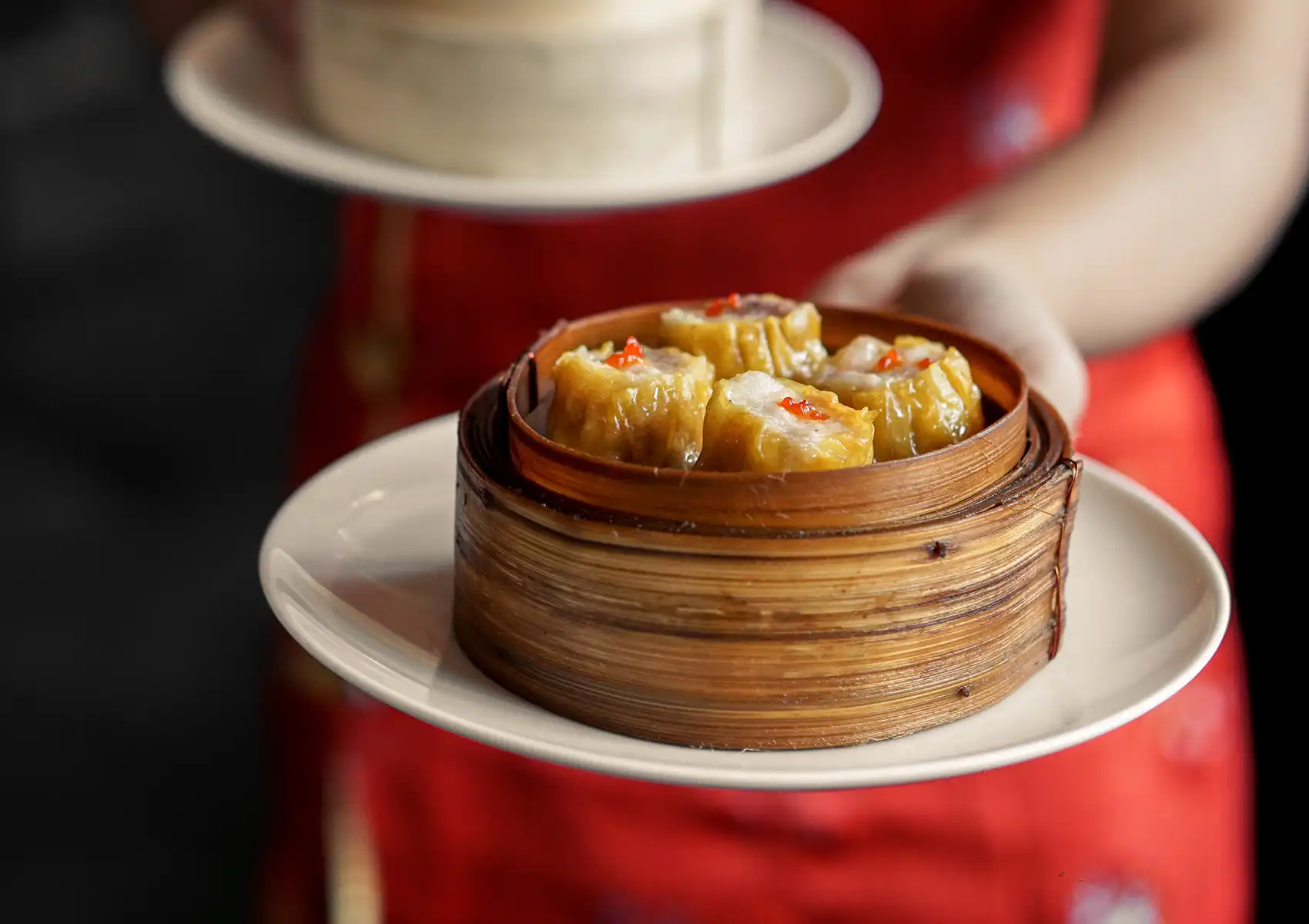
Dim sum siu mai is a dish you recognise the moment it reaches the table. It sits open at the top, the filling gathered inside a thin wheat wrapper and left visible above the rim. At Golden Monkey, a Cantonese restaurant in Bali, it is prepared with the care that tradition demands. The appearance is simple, the execution precise. That balance is the heart of good Siu Mai, and it rewards a little understanding before you order from the Cantonese dim sum menu.
The Open-Topped Dumpling of the Cantonese Table
Siu Mai holds a settled place on the Cantonese dim sum table. It is one of the first baskets people reach for and one of the last to sit unfinished. Its standing has nothing to do with novelty. It comes from form and restraint, from a dumpling that does the simple things well.
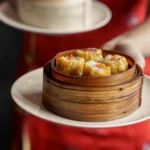
The defining feature is the open top. Many dumplings are sealed and pleated shut, but Siu Mai is left uncovered, its filling drawn up around the sides. That open shape is the mark of a proper Siu Mai, putting the pork or prawn on show before you lift a piece from the basket.
The Many Names of Siu Mai
The dish travels under several names, and each points to the same idea. Siu Mai is the Cantonese reading. Shumai is the spelling you often see in English. Shao Mai reflects the Mandarin pronunciation. The variations in spelling follow the variations in dialect, not in the dish itself.
Regional versions do differ. Northern Chinese kitchens developed their own takes, some with sticky rice, others with lamb. The Cantonese version is the one most closely tied to the yum cha table, made with pork or prawn and a light hand with seasoning. This is the Siu Mai you meet at yum cha, and the one prepared at Golden Monkey, a Cantonese restaurant in Bali.
The Filling That Defines Siu Mai
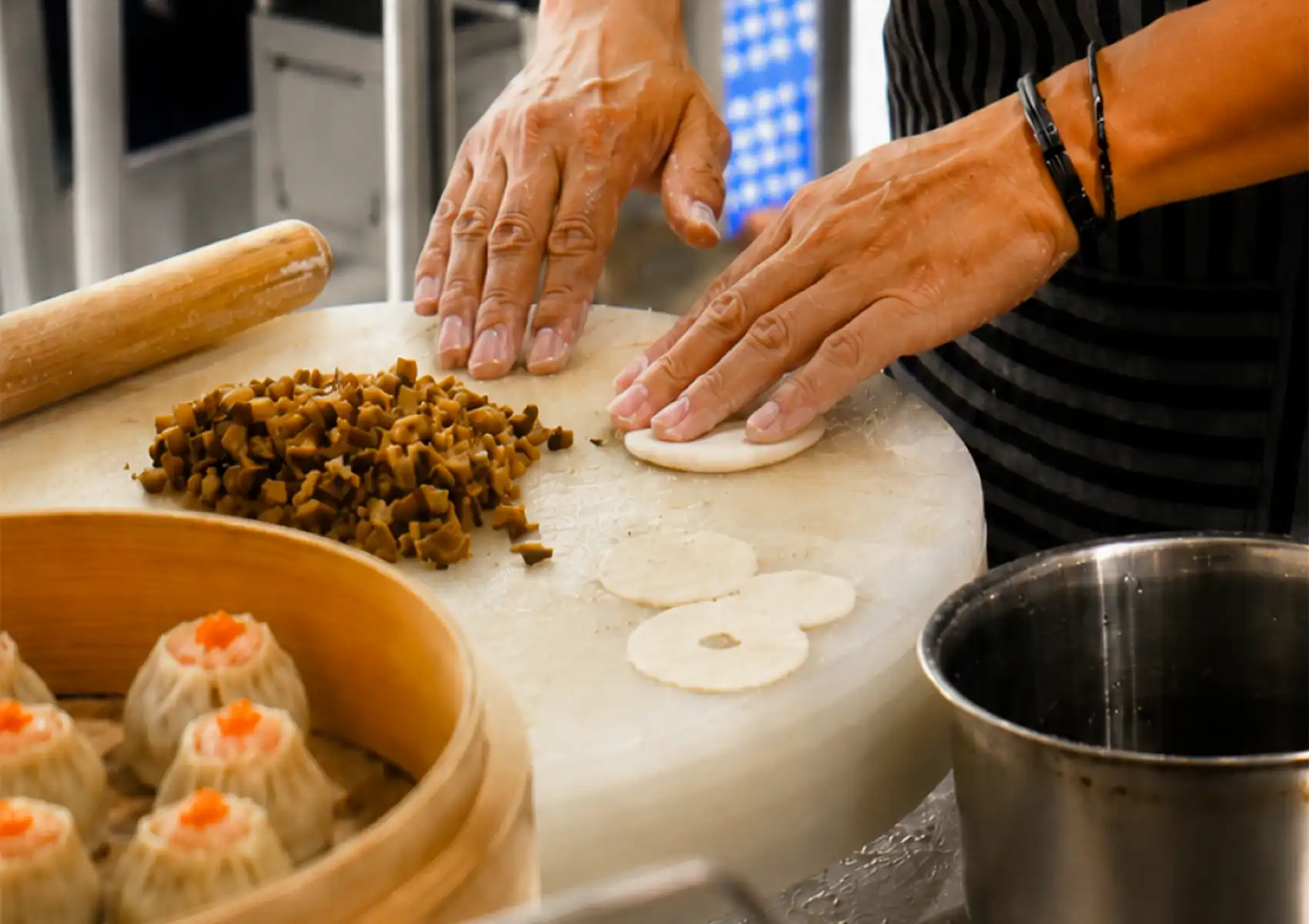
The filling is where dim sum siu mai makes its case. At its centre sits pork or prawn, each bringing something the other cannot. The pork carries the body and the savour. The prawn adds a clean, natural sweetness that keeps every bite bright. That contrast is what sets the classic pork or prawn dumplings apart.
The seasoning stays deliberately light, as it does across the cuisine. It is there to support the pork or prawn, not to cover it. A little sharpens the natural flavour of the ingredients without overpowering the filling. When the balance is right, you taste the filling first and the seasoning only after.
On the menu, this is listed simply as Steamed Pork or Prawn Dumplings. Good Siu Mai does not need embellishment. It needs quality ingredients and a light, confident hand.
The Balance of Flavour in a Single Bite
A well-made Siu Mai is about texture as much as it is about taste. The wrapper is thin and yielding. The filling is tender, with a gentle spring from the prawn and a soft richness from the pork. Together they give the balance of flavour that defines Cantonese cooking, where no single element dominates. You lift it from the steamer, and it holds together cleanly. One bite gives you the whole dish.
The Craft in the Wrapper and the Folds
The wrapper tells you a great deal about the kitchen. Siu Mai uses a thin, round wheat wrapper, pale yellow and soft, quite different from the starch skin of a Har Gow. It is wrapped around the filling, then gathered up the sides, leaving it open at the top. The folds are gentle and even, cupping the filling rather than closing it away.
The gathering is a skill in its own right. The wrapper must be thin enough to remain tender yet strong enough to hold its shape during steaming. Too thick, and the dumpling turns heavy. Too thin, and it breaks. The even folds are a sign the kitchen has judged this well.
The steamer does the rest. Gentle steam sets the filling and softens the wrapper, yielding a dumpling that is tender throughout and true to its tradition.
Siu Mai and Har Gow Side by Side
Siu Mai and Har Gow often share a steamer, and it helps to know how they differ. The clearest difference is the top. Har Gow is sealed and pleated shut, its filling held behind a fine skin. Siu Mai does the opposite, its filling sitting in plain view.
The fillings are different too. Har Gow holds whole prawns alone. Siu Mai is one of the classic pork or prawn dumplings, which gives it a fuller, rounder flavour. The wrappers diverge as well. Har Gow uses a starch dough, while Siu Mai uses a wheat one.
If you would like the full story of the sealed dumpling, our piece on har gow dim sum covers the technique in detail. Ordered together, the two show the range of a single tradition.
Where to Find Siu Mai Dim Sum in Bali
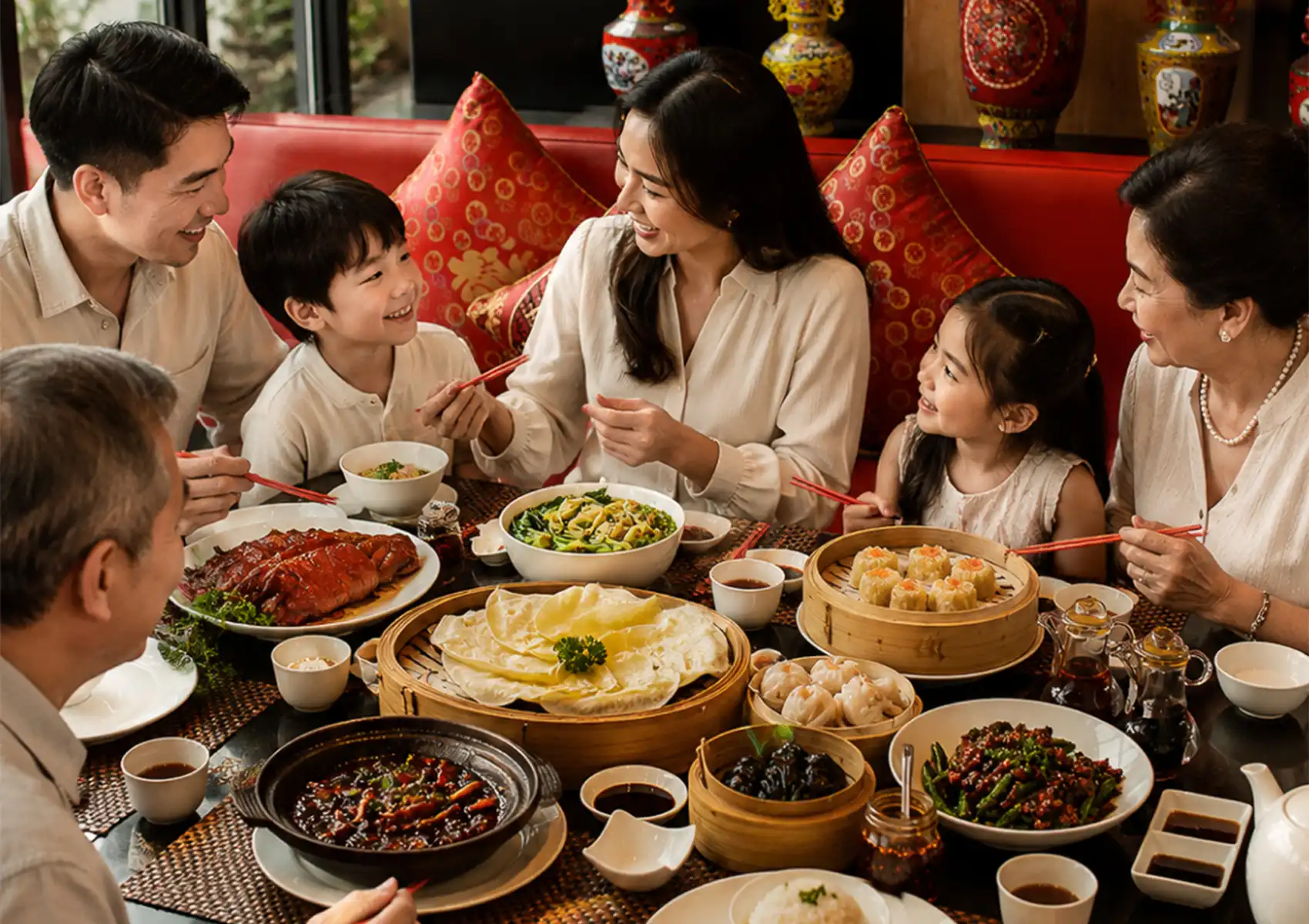
Dim sum siu mai made with genuine Cantonese technique is not easy to find in Bali. It needs a kitchen that respects the balance the dish depends on. Golden Monkey is a Cantonese restaurant in Bali that upholds that standard, and its handmade dumplings, Siu Mai among them, are part of the full Cantonese dim sum menu at both locations.
You will find it in Ubud on Jalan Dewi Sita, and in Sanur on the ground floor of Icon Mall Bali, a short walk from the beachfront promenade. Both kitchens prepare the same pork or prawn dumplings with equal care.
Browse the full dim sum menu before you arrive, then reserve your table and choose the location that suits you best.