Har Gow dim sum is one of the truest tests of a dim sum kitchen. It arrives in the steamer basket with a translucent skin pulled taut over a whole prawn, the edges pleated by hand, the filling visible beneath the surface. Simple to describe and difficult to make well, it rewards a kitchen that takes genuine care. Golden Monkey, an authentic Cantonese restaurant in Bali, brings that care to every basket at both of its locations.
Har Gow and Its Place in the Cantonese Dim Sum Tradition
Har Gow sits alongside Siu Mai, Cha Siu Bao, and egg tarts as one of the Four Heavenly Kings of Cantonese dim sum. These are the dishes that define the tradition, and among the four, Har Gow places the greatest demands on the kitchen. Its reputation is built not on bold flavour or complex seasoning but on precision and restraint. These are the two qualities that define Cantonese cooking at its best.
A Dish That Judges the Kitchen
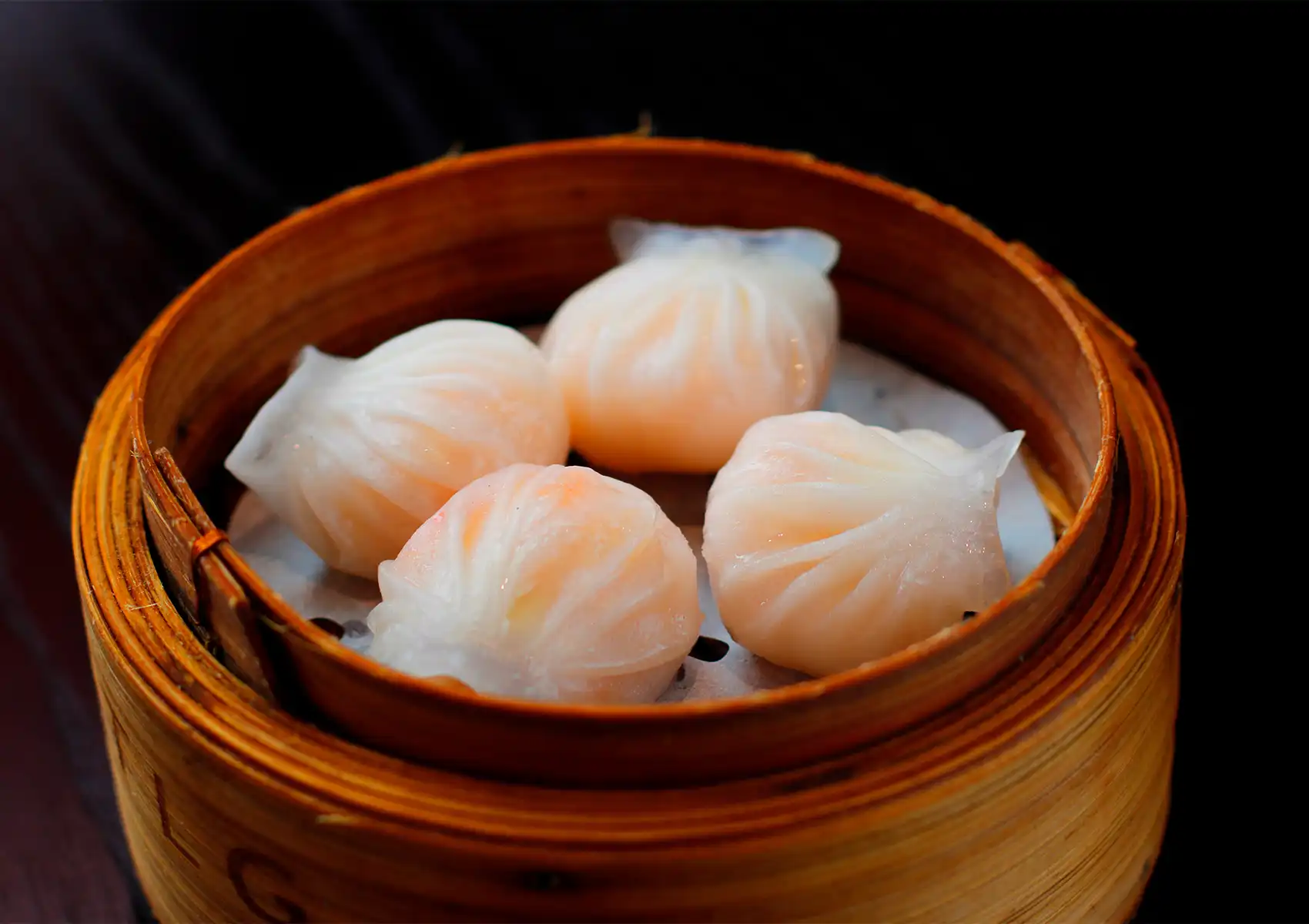
A well-made Har Gow shows its quality the moment it reaches the table. Lift one with your chopsticks and the test is immediate. The skin should be thin enough to reveal the prawn inside, yet sturdy enough to hold without tearing. The filling should be generous but neatly contained, never spilling from the seam. Meet both of these marks, and you are tasting the restraint and precision at the heart of Cantonese cooking.
The Origins of Har Gow
Har Gow originates from Guangdong Province in southern China. The first recorded version was served at Yi Zhen Restaurant in Wufeng Village, Guangzhou, where it was known as Wufeng Har Gow. From there, it became a staple of the Cantonese dim sum table and one of the clearest expressions of what the cuisine values most.
The Technique Behind the Wrapper
The wrapper is where Har Gow is won or lost. The filling matters. The pleating matters. But a poorly made wrapper undoes both. This is the element that separates a well-made Har Gow from one that merely resembles it.
The Dough and the Translucent Skin
The Har Gow wrapper uses a specific starch-based dough that becomes translucent when steamed. This is the characteristic that gives Har Gow its other name: crystal shrimp dumpling. The dough is demanding to work with. The conditions must be precise, or the wrapper loses the quality that defines the dish.
The Pleats and the Standard They Set
The pleats on a Har Gow are not decorative. They seal the filling and signal the level of skill applied to the preparation. Traditionally, a well-made Har Gow has between seven and thirteen pleats. The more neat, even pleats there are, the more they reflect the chef’s skill and experience. Each pleat must be consistent, applied without distorting the skin or compressing the filling. It is one of the clearest indicators of the care and technique that go into every dumpling.
What Is Har Gow Made Of?
The filling is the second pillar of a well-made Har Gow. The wrapper sets the standard; the filling delivers the flavour.
Har Gow is a prawn dumpling. The prawn is the primary ingredient, and the Cantonese approach to the filling mirrors the cuisine’s broader philosophy. The seasoning is kept deliberately light, supporting the prawn’s natural sweetness rather than competing with it. The goal is a filling that tastes of prawn, not of its seasoning.
At Golden Monkey, the Har Gow is prepared as Steamed Whole Prawn Dumplings. The whole prawn distinguishes a properly made Har Gow from lesser versions in which the filling has been minced or reduced. It is available as part of the full dim sum menu at both the Ubud and Sanur locations.
What Is the Difference Between Har Gow and Dumplings?
Har Gow is a dumpling, but not all dumplings are Har Gow. The differences are specific and worth understanding before you order.
The Wrapper
Standard dumplings use a regular flour dough, which turns opaque when cooked. Har Gow uses a different starch-based dough, which becomes translucent when steamed. This is the most immediate and visible distinction. The translucent skin is not an aesthetic choice. It is the result of a specific combination of techniques and ingredients that is exclusive to Har Gow.
The Filling
Dumplings, as a broad category, encompass pork, cabbage, chive, mushroom, and countless other fillings. Har Gow is specifically a prawn dumpling. The filling does not vary as general dumpling fillings do. The prawn is the point, and it is non-negotiable in a traditional preparation.
The Cooking Method
Har Gow is always steamed. Other dumplings can be steamed, boiled, fried, or pan-fried. Steaming is what produces the clarity of the skin and the tender, yielding texture that defines a properly made Har Gow. It is a cooking method that cannot be substituted without fundamentally changing the dish.
The Dim Sum Table Worth Sitting Down For in Bali
Har Gow dim sum, prepared using genuine Cantonese technique, is not easy to find in Bali. Golden Monkey is a Cantonese restaurant in Bali that holds itself to the standard the dish demands. The skin is translucent. The prawn is whole. The pleats are precise. That is what arrives at the table at both the Ubud and Sanur locations, and it is worth sitting down for.
Browse the full menu before you arrive, then reserve your table at Golden Monkey Bali and choose the location that suits you.