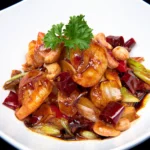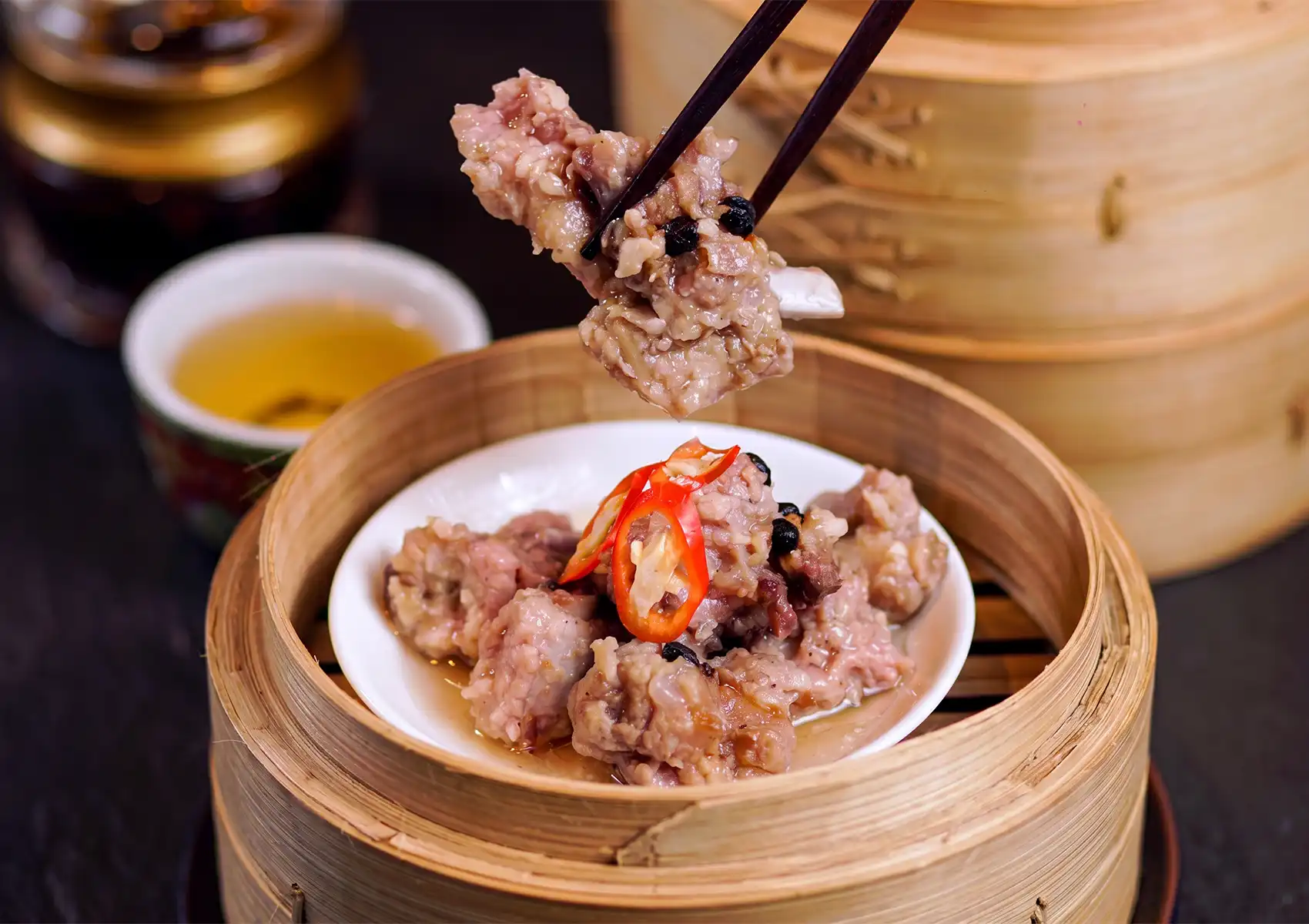
Chinese steamed pork ribs with black bean sauce are among the defining preparations on the Cantonese dim sum table. At Golden Monkey, a Cantonese restaurant in Bali, this dish arrives the way it should. Tender ribs rest in a savoury black bean sauce, the steam still present, the meat pulling cleanly from the bone. It is a preparation built on patience and technique, and it is exactly what the Cantonese dim sum tradition demands.
Steamed Pork Ribs and the Cantonese Dim Sum Tradition
Steamed pork ribs with black bean sauce have been a fixture of the Cantonese dim sum trolley for generations. They are not a minor dish or a supporting order. They are a centrepiece preparation that has earned its place on the dim sum table through consistency, depth of flavour, and an understanding of how pork and fermented black bean work together.
A Dim Sum Classic Worth Understanding
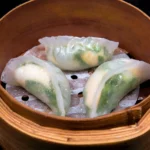
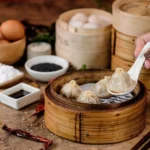
The dish sits naturally alongside Har Gow, Siu Mai, and Xiao Long Bao as part of the broader Cantonese dim sum spread. Each of these preparations represents a different technique within the same tradition. The steamed pork rib represents the tradition at its most direct. It is a single cut of pork, a considered sauce, and a cooking method that brings both together without complication.
The Cantonese approach to the meat and the sauce mirrors the broader philosophy of the cuisine. The pork is the point. The black bean sauce is there to deepen and frame it, not to compete with it.
The Role of Black Bean Sauce
Fermented black bean sauce brings a savoury depth to steamed pork ribs that lighter sauces simply cannot match. The fermentation process gives the sauce a complexity that develops over time. It is a quality the Cantonese kitchen has valued for centuries. It complements the natural richness of the pork without overwhelming it.
This sauce takes time to develop, making it a natural companion to a dish that rewards the same patience. The two elements work together in a way that feels considered rather than accidental.
The Cantonese Approach to Steaming Pork Ribs
Steaming is not the obvious choice for pork ribs. It is the correct one. In the Cantonese kitchen, steaming is chosen for this dish because it produces a result that no other cooking method can replicate. The meat is tender and yielding without being soft or dry, with the natural flavour of the pork fully intact.
Steaming as a Cantonese Technique
The gentle, even heat of a steamer renders the fat gradually and softens the collagen in the ribs without stripping the meat of its texture. Frying produces crispness. Braising produces a deeper softness. Steaming produces something specific and precise. The ribs pull away from the bone cleanly but retain their structure and depth of flavour.
The black bean sauce penetrates the surface of the meat during steaming, working into the pork rather than sitting on top of it. The result is a dish where the sauce and the meat are genuinely integrated rather than simply combined.
Chinese Steamed Pork Ribs at Golden Monkey Bali
Golden Monkey serves the Pork Spare Ribs as Steamed Pork Ribs with Black Bean Sauce, available as part of the full dim sum menu at both the Ubud and Sanur locations. The dish sits alongside Har Gow, Siu Mai, Xiao Long Bao, and other classic preparations that together make up a proper Cantonese dim sum spread.
For those who want to explore the broader dim sum menu, the Mixed Dim Sum option brings together five classic preparations in a single order and is a generous way to begin. For guidance on building a comprehensive shared table across all menu categories, the ordering guide for a Chinese restaurant in Bali is a useful starting point.
Steamed Pork Ribs and the Dim Sum Table They Complete
This is not a complicated dish to understand. It rewards technique and a genuine respect for the ingredient. At Golden Monkey, a Cantonese restaurant in Bali that takes its dim sum seriously, both qualities are present at every table.
Browse the full menu before you arrive, then reserve your table at Golden Monkey Bali and choose the location that suits you.