Noodles sit at the heart of the Cantonese table, and knowing the types of Chinese noodles makes every meal easier to order and enjoy. Each one brings its own character, history, and place in the kitchen. At Golden Monkey, a Cantonese restaurant in Bali, that heritage arrives at the table with the care it deserves. This guide walks you through the main varieties, so you know exactly what you are choosing and why it matters.
Understanding Chinese Noodles in the Cantonese Kitchen
Chinese noodles fall into two families that matter most in Cantonese cooking. One relies on wheat, often enriched with egg. The other is made from rice. Each behaves differently in the wok and in the bowl. Across both, Cantonese cooking values fresh, balanced flavour above heavy seasoning. The noodle is never buried beneath sauce. It is treated as an ingredient in its own right, chosen to suit the dish and cooked to hold its texture. That restraint keeps each dish clean and light.
Egg Noodles
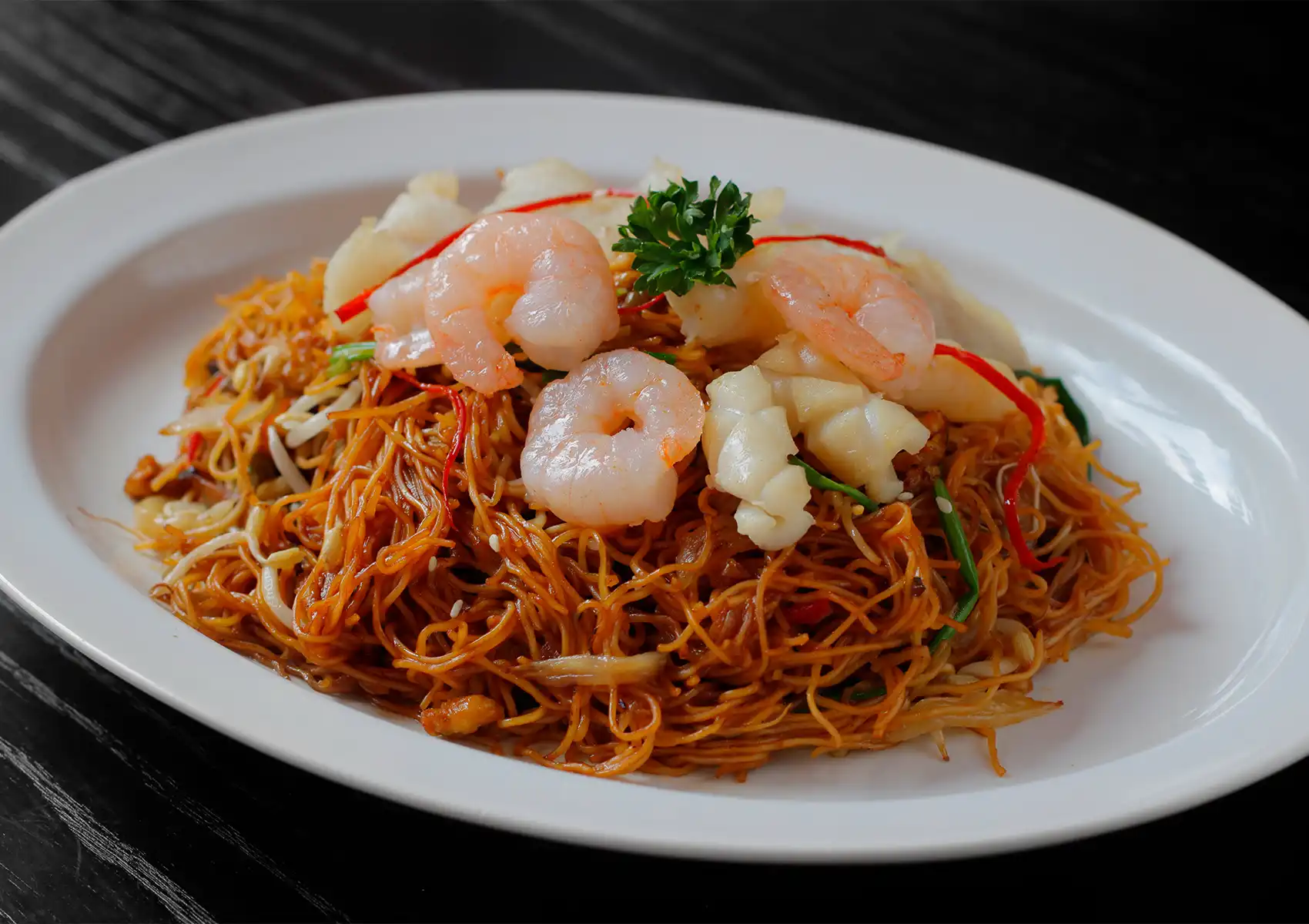
Egg noodles are wheat noodles enriched with egg, which gives them a golden colour and a firm, elastic bite. They hold their shape in broth and withstand the heat of the wok. This makes them a common choice for soups, stir-fries and pan-fried dishes alike.
Wonton Noodles
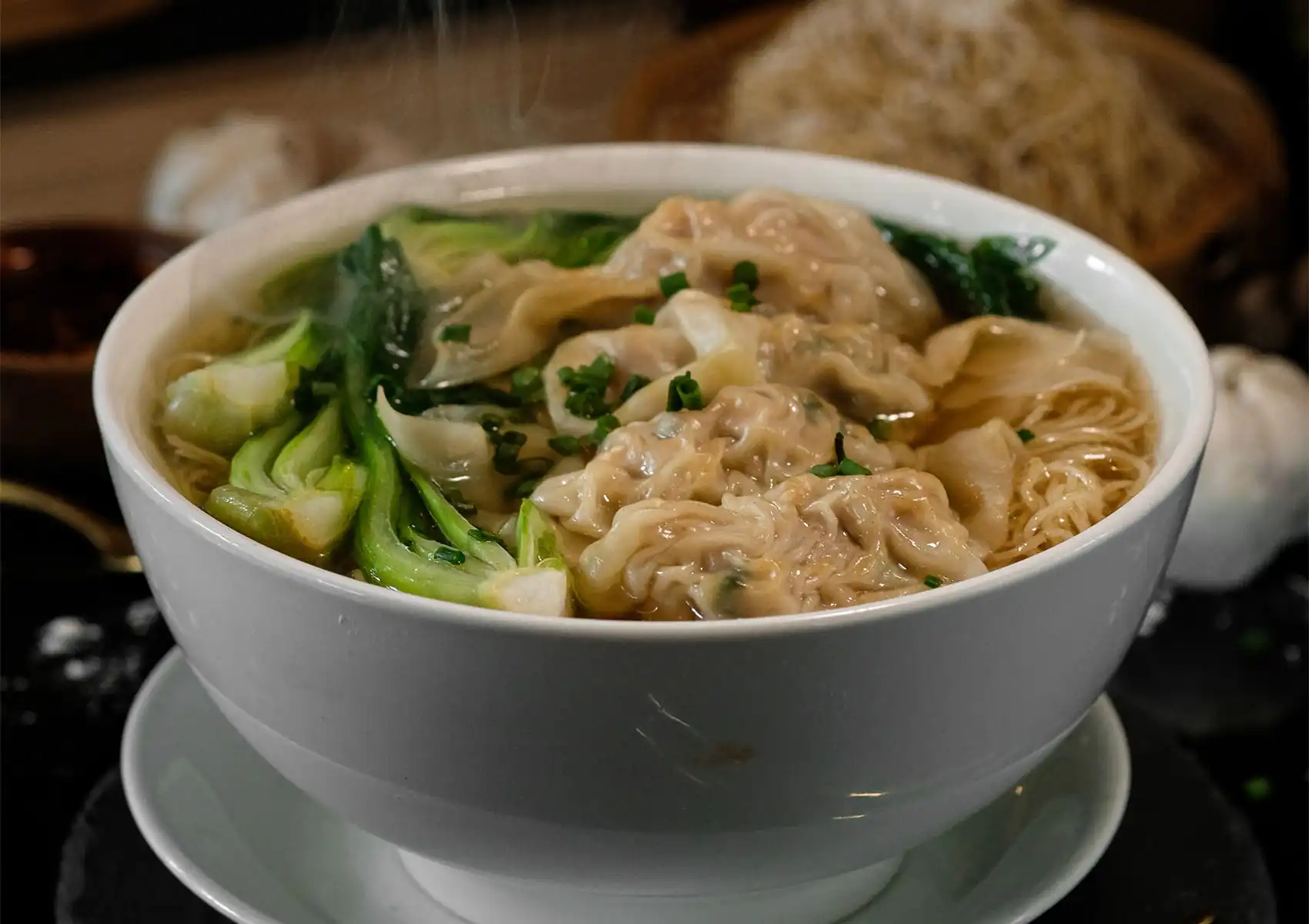
Wonton noodles are thin, springy egg noodles, usually served in a clear, savoury broth alongside plump wontons. They stay taut rather than soft, giving each mouthful a gentle resistance that holds up in a light soup.
Lo Mein and Chow Mein
Lo Mein and Chow Mein use similar egg noodles prepared in two different ways. Lo Mein noodles are boiled and tossed with sauce, so they stay soft and glossy. Chow Mein noodles are pan-fried, which builds a crisp edge against a tender centre. Knowing this difference tells you what to expect before the plate arrives.
Yi Mein
Yi Mein, also called E-Fu noodles, are pre-fried wheat and egg noodles with a porous, spongy quality. They soak up sauce beautifully and carry deep, savoury flavour. Traditionally served at celebrations, they are known as longevity noodles and hold a place of honour at the banquet table.
Rice Noodles
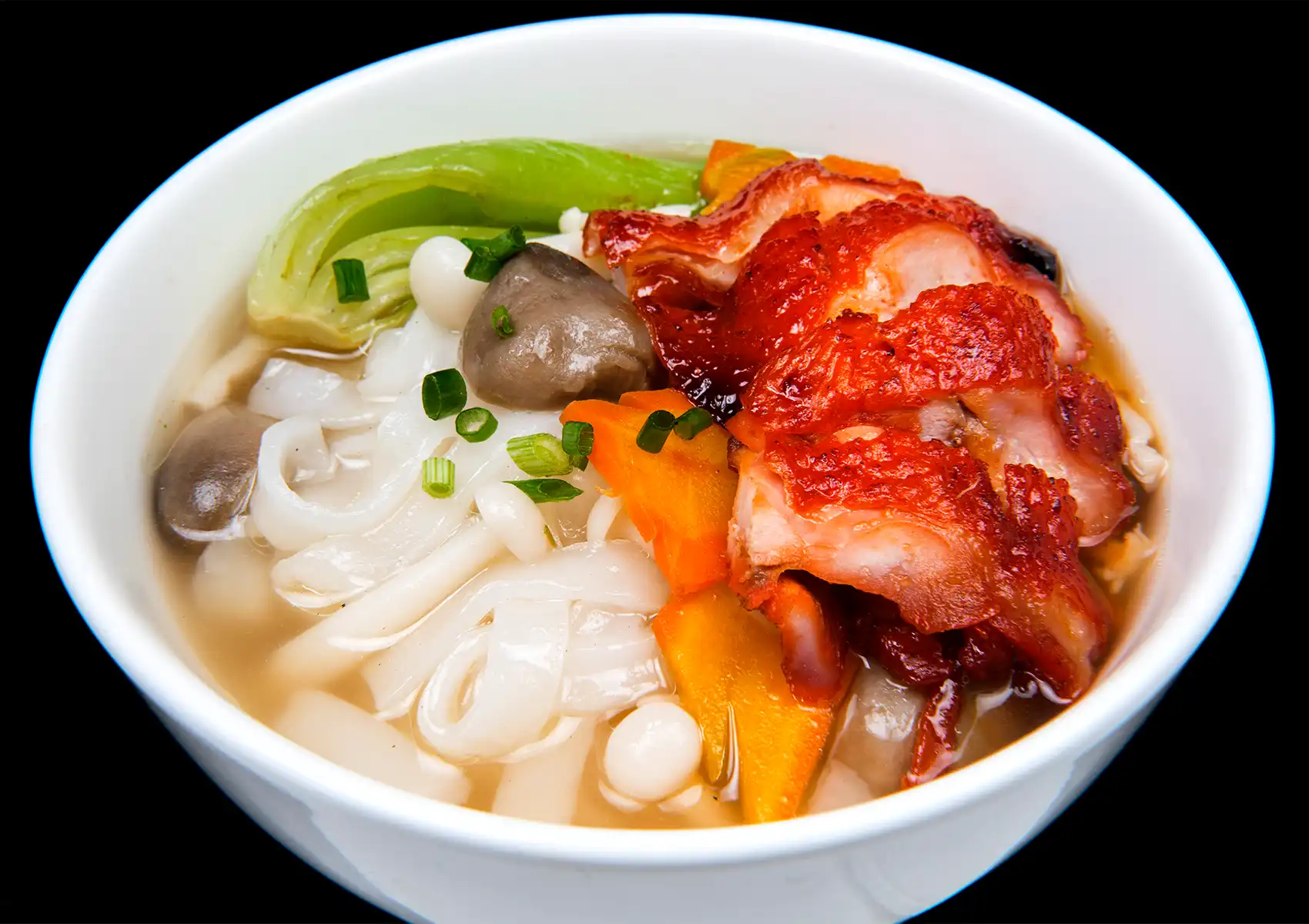
Rice noodles are made from rice flour rather than wheat, which gives them a more delicate character. They contain no eggs or gluten. Their silky, tender feel makes them a natural partner for lighter dishes and gentle, aromatic broths.
Ho Fun
Ho Fun are wide, flat rice noodles that are soft and slippery to eat. They are the foundation of beef chow fun, cooked over high heat to take on their signature smoky depth. Their broad surface catches sauce and holds it well.
Rice Vermicelli
Rice vermicelli, known as mai fun, are fine, thread-like rice noodles. They cook in moments and stay light, which suits them to soups and quick stir-fries. Where Ho Fun brings body, vermicelli brings a subtle lift that never weighs the dish down.
Noodles on the Menu at Golden Monkey
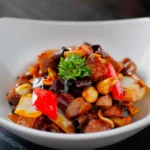
Both noodle families covered in this guide appear on the menu at Golden Monkey. You will find an egg noodle dish and a rice noodle dish, each prepared in the Cantonese tradition and available with beef, chicken, seafood, or vegetables.
This gives you room to match the noodle to the meal you are in the mood for. Choose egg noodles when you want a firmer bite for a robust sauce. Choose rice noodles when you want something smoother and more delicate. Either way, you can browse the full menu before you arrive.
Choosing the Right Noodle for the Dish
The right noodle depends on how the dish is cooked. For a clear soup, a springy egg noodle or fine rice vermicelli keeps the bowl clean and the flavours bright. For a saucy stir-fry, wide Ho Fun or tossed Lo Mein gives the sauce something to cling to.
For a pan-fried dish, Chow Mein delivers the crisp finish many diners look for. Once you understand these pairings, ordering follows the dish rather than guesswork.
Chinese Noodle Types at a Glance
The table below sets the main types of Chinese noodles side by side, so you can compare them quickly.
| Noodle | Base Ingredient | Texture | Best-Suited Dish |
| Wonton Noodles | Wheat and egg | Thin and springy | Clear noodle soup |
| Lo Mein | Wheat and egg | Soft and glossy | Tossed and sauced |
| Chow Mein | Wheat and egg | Crisp and tender | Pan-fried |
| Yi Mein | Wheat and egg | Porous and spongy | Celebration dishes |
| Ho Fun | Rice | Wide and slippery | Wok-fried classics |
| Rice Vermicelli | Rice | Fine and light | Soups and light stir-fries |
Frequently Asked Questions
What Makes Cantonese Noodles Distinct
Cantonese noodle dishes favour fresh ingredients, clean broths, and a light touch with seasoning. Each noodle is matched to its dish and cooked to keep its shape, rather than left to soften into the sauce. The result is balanced and satisfying without being heavy.
Are Rice Noodles Gluten Free
Rice noodles are made from rice flour and contain no wheat, so they are naturally gluten-free. Egg noodles, by contrast, are wheat-based. If you follow a gluten-free diet, the rice noodle option is the one to ask for.
Which Noodle Is Best for Soup
For a clear Cantonese broth, thin wonton egg noodles or fine rice vermicelli work best. Both sit lightly in the broth and let it lead. Wider or heavily fried noodles pair better with sauced and pan-fried dishes.
A Noodle Table Worth Making Time for in Bali
Understanding the types of Chinese noodles turns a simple order into a considered one. From chewy egg noodles to silky rice noodles, each variety has its place, and each rewards a little knowledge. Golden Monkey is a Cantonese restaurant in Bali that treats these noodles with the respect the tradition demands. Reserve your table at the location that works for you, and choose the noodle that suits your meal.