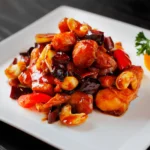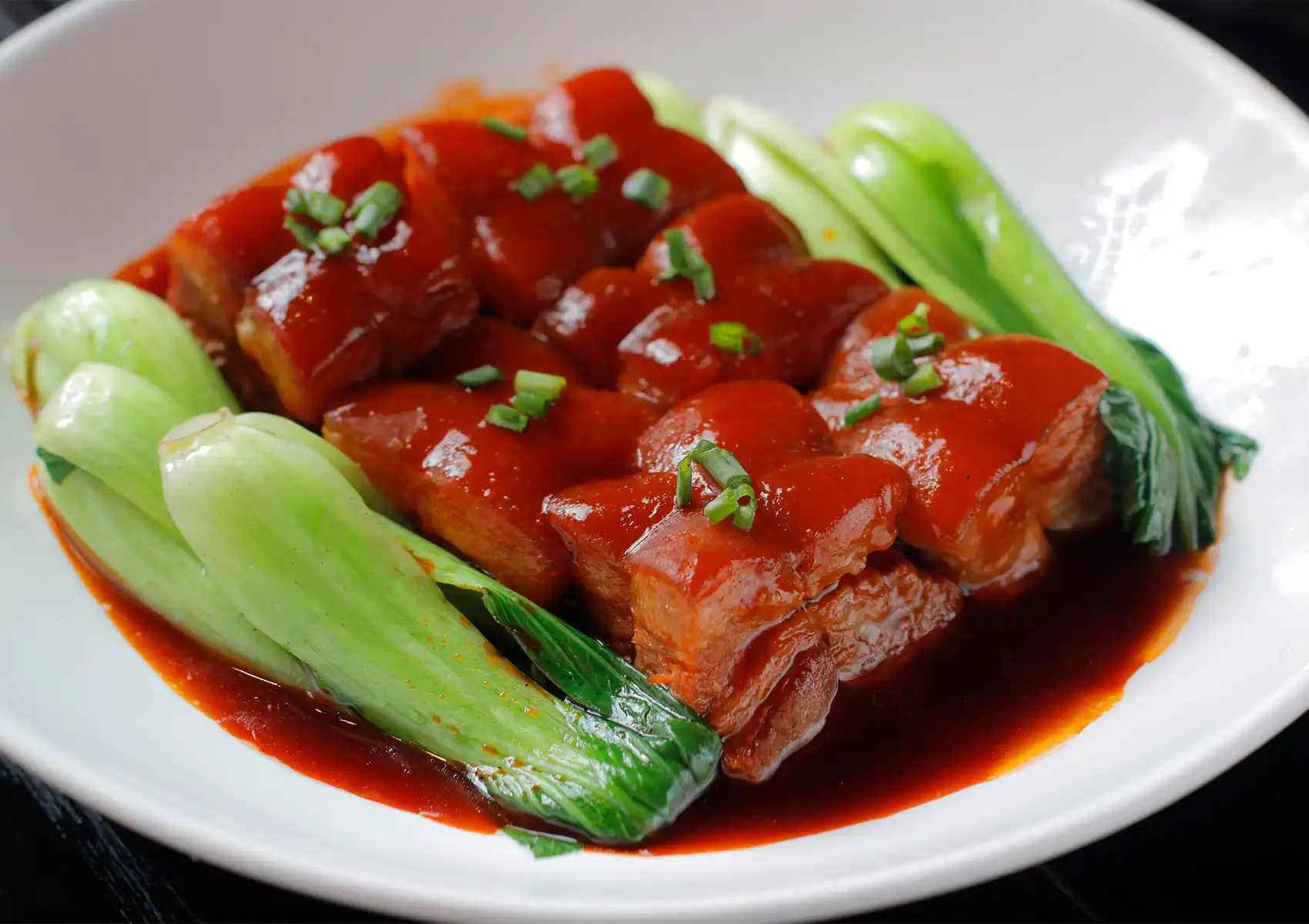
Braised pork belly Bali done well is not a dish that announces itself loudly. It arrives at the table with a deep, burnished glaze, layers of tender meat giving way beneath the surface, and a honey sauce that adds quiet sweetness to every bite. It is the kind of dish that reminds you what patience in the kitchen actually produces. And it is the kind of dish that Cantonese cooking has been refining for centuries.
What Is Braised Pork Belly?
Braised pork belly is a dish made by slow-cooking a cut of pork belly in liquid over low, sustained heat until the meat becomes deeply tender and the surrounding sauce reduces into something rich and flavoursome.
Pork belly is one of the best-suited cuts for braising. It carries a generous fat-to-meat ratio, layered in a way that responds exceptionally well to slow heat. As the temperature builds gradually, the fat begins to render, and the connective tissue softens. The result is meat that holds together but yields easily, with none of the dryness or toughness that faster cooking methods can produce.
Braising is not a technique built for speed. It is built for depth. The longer the braise, the more the flavours from the surrounding liquid are absorbed into the meat. A well-braised pork belly carries the seasoning all the way through, not just on the surface.
In Cantonese cooking, this process is approached with particular care. The seasoning is deliberate but restrained. The goal is to bring out the natural character of the pork, not to mask it.
How Long Does It Take to Braise a Pork Belly?
A proper braise takes time. Depending on the cut, the liquid, and the heat level, braising pork belly typically requires 1.5 to 3 hours of sustained low heat.
During that time, the collagen within the meat slowly converts to gelatin. The fat renders gradually into the surrounding liquid, enriching it. The muscle fibres soften without breaking down entirely. What begins as a relatively firm cut of pork becomes something yielding and deeply satisfying.
In the Cantonese tradition, this process is not rushed. Cantonese cuisine places significant value on the natural character of each ingredient, and braising is one of the techniques that most directly honours that value. Applying high heat to shorten the process would compromise the texture and strip away the subtlety that makes a well-braised pork belly worth eating in the first place.
This is precisely what makes the dish so easy to get wrong and so rewarding when it is done properly. A braised pork belly that has been given the time it needs is a genuinely different thing from one that has not.
The Cantonese Approach to Slow Cooking
Cantonese cuisine is often described in terms of what it does not do. It does not rely on bold spice. It does not use heavy seasoning to carry a dish. It does not rush. These are not limitations. They are principles that produce a style of cooking quietly distinctive among China’s regional cuisines.
The Cantonese kitchen is built around fresh, high-quality ingredients and techniques that enhance rather than overpower them. Slow cooking is central to that approach. Whether braising, steaming, or simmering in a long broth, the emphasis is always on drawing out the ingredient’s natural depth rather than adding complexity from the outside in.
Patience Over Heat
Braising in the Cantonese tradition is an exercise in restraint. The heat is kept low, and the process is allowed to unfold over time. This is what produces the characteristic tenderness of a Cantonese braised pork belly. The collagen breaks down gradually. The fat renders slowly into the surrounding liquid, enriching it without making the dish heavy. The meat absorbs the sauce from the inside out.
The result is a layered dish. Not layers of spice or seasoning, but layers of texture and natural flavour that only sustained, unhurried cooking can produce. It is the kind of depth that cannot be replicated quickly.
The Role of Honey Sauce in Cantonese Pork Dishes
Honey plays an important role in Cantonese pork cookery. In braised pork belly, honey sauce brings a mild, rounded sweetness that complements the meat’s natural richness rather than competing with it. The sweetness is present but not dominant. It adds warmth and a gentle glaze without pulling the dish away from its savoury foundation.
This same principle applies across several preparations in the Cantonese BBQ tradition, including Char Siew, the honey-roasted pork that has become one of the most recognisable dishes in the broader repertoire. Both preparations use sweetness as an enhancing element. If you are curious about how that tradition extends across the full range of roasted and glazed preparations, the Chinese BBQ tradition in Ubud is worth exploring in more detail.
Braised Pork Belly at a Cantonese Restaurant in Bali
Bali offers a remarkable range of dining options, but finding authentic Chinese food in Bali that genuinely reflects Cantonese culinary tradition takes more searching than most visitors expect. The cuisine is often simplified or adapted for a broader audience. Dishes that should be built on subtlety and restraint can arrive heavier, sweeter, or more aggressively seasoned than their Cantonese origins intend.
Golden Monkey Bali is one of the few restaurants in Bali where the Cantonese kitchen is taken seriously. The menu spans handmade dim sum, Chinese BBQ, wok-fried classics, and a full à la carte selection that includes Braised Pork Belly among its most considered pork dishes.
What the Dish Looks Like on the Plate
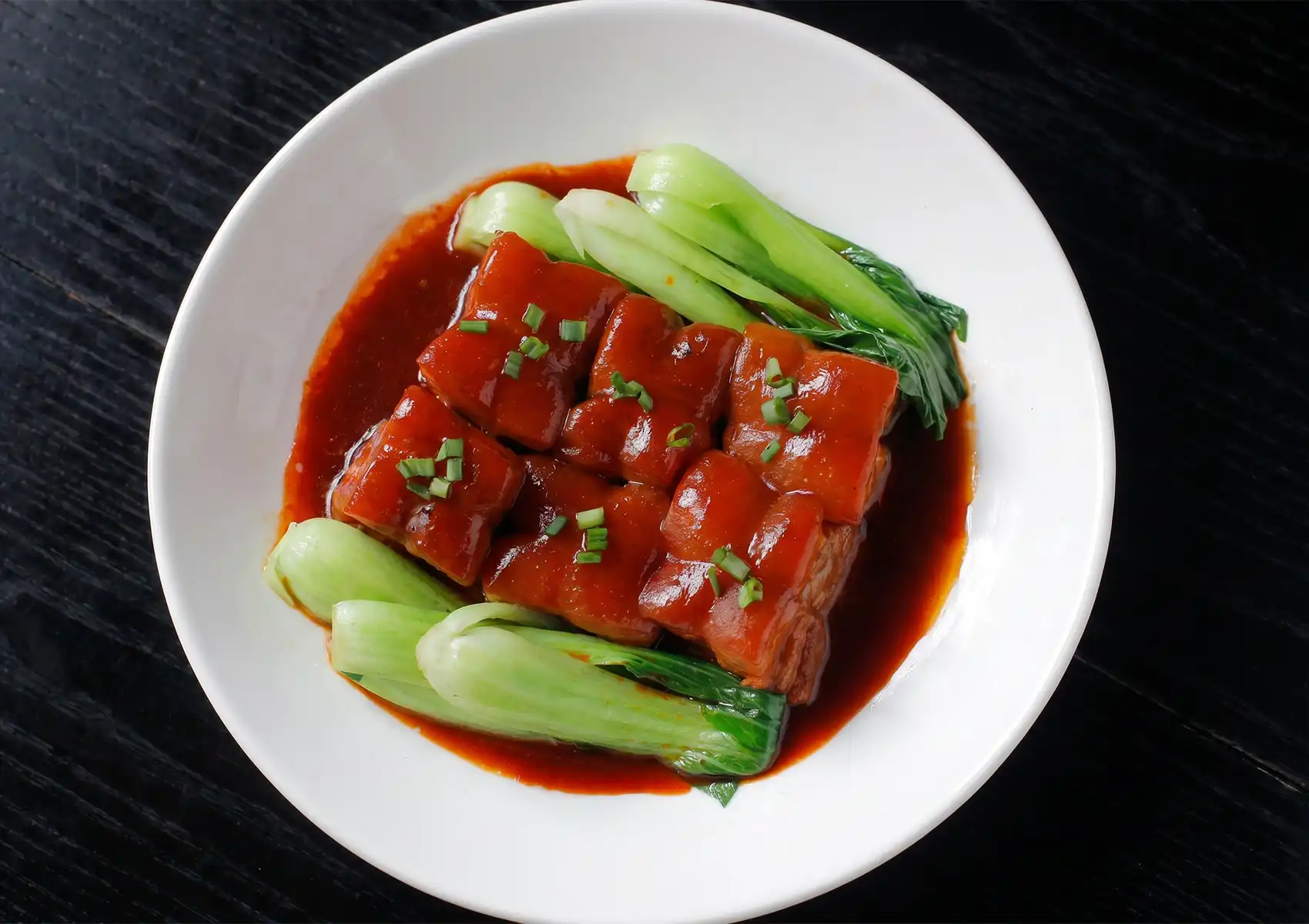
The Braised Pork Belly at Golden Monkey arrives with a honey sauce that coats each piece with a gentle, caramelised finish. The exterior carries the depth of a long braise. The meat beneath is tender and yielding, with the fat having rendered into the dish rather than sitting heavily on it. Each bite delivers the sweetness of the honey alongside the natural savouriness of the pork.
It is available in two portions. The small is priced at IDR 115,500 and the large at IDR 209,000, both subject to 21% combined government tax and service charge. For a shared table, the large portion sits comfortably alongside two or three other dishes.
Ordering It as Part of a Shared Cantonese Meal
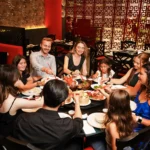
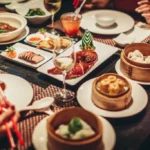
Cantonese dining is designed around the table, not the individual plate. The Braised Pork Belly works best as part of a broader spread, where its richness is balanced by lighter preparations.
A portion of stir-fried greens with garlic sauce brings freshness to the table. A bowl of steamed rice provides the quiet foundation on which Cantonese meals are built. A clear soup, such as the Corn Chicken or the Wonton, rounds out the meal without adding weight. For a fuller picture of how to build a shared Cantonese meal in Bali, the guide to ordering at a Chinese restaurant in Bali is a useful starting point. If you are planning a longer evening at the table, the restaurant’s wine list pairs well with the dish’s honey notes. The wine and food pairing guide offers practical guidance on matching wine to Cantonese flavours.
A Dish Worth Making Time For
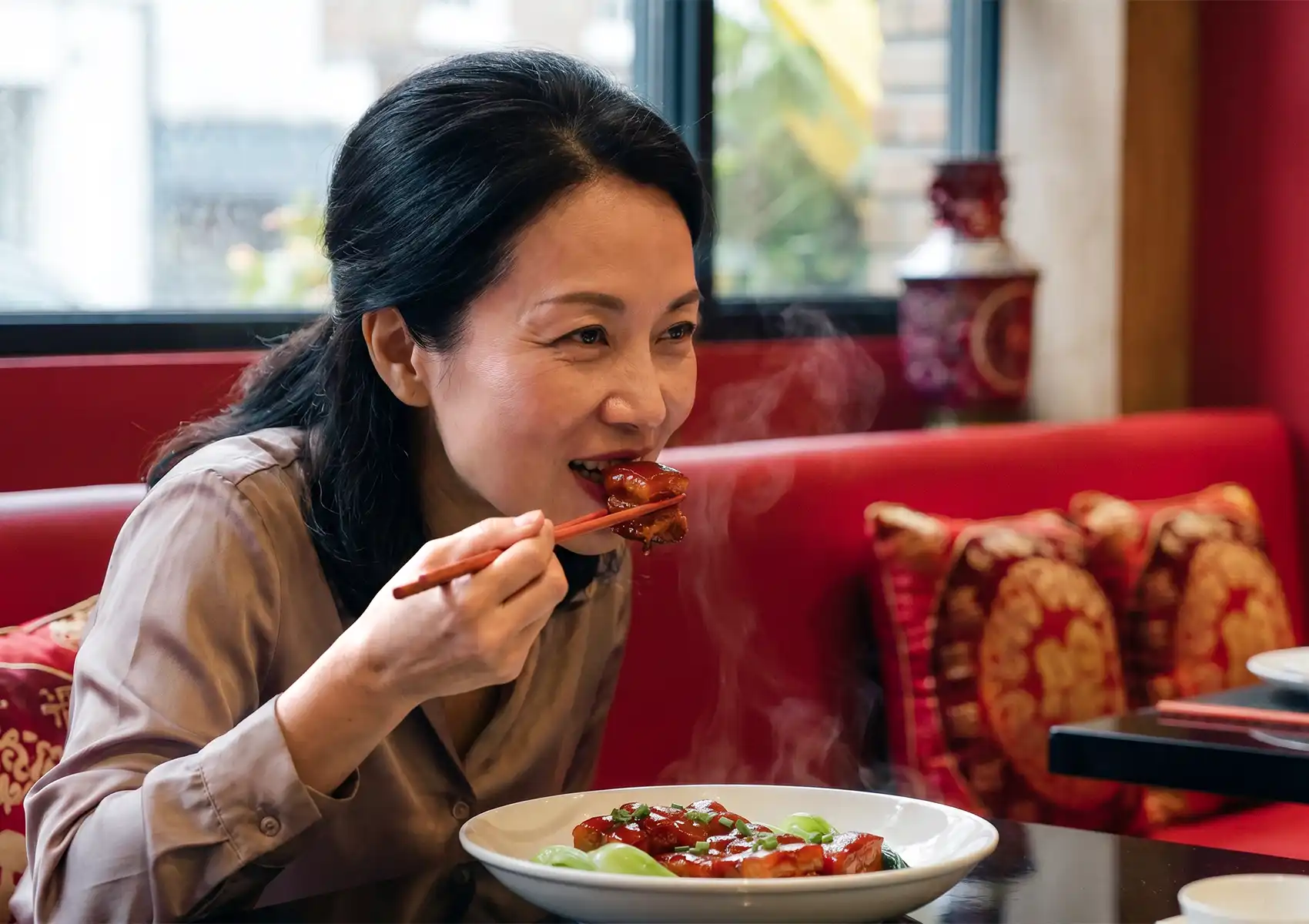
Patience, precision, and a genuine respect for the ingredients. That is what Cantonese cooking demands, and it is what Golden Monkey delivers at both its Ubud and Sanur locations.
If you are ready to sit down to a meal that rewards attention, a reservation at this Cantonese restaurant in Bali is the right place to start. Browse the full menu before you arrive, then reserve your table at Golden Monkey Bali and choose the location that suits you.